


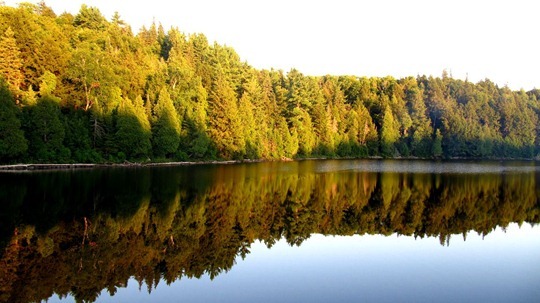
Photo of Algonquin Park by James D. Schwartz / The Urban Country
Last week I returned from an epic 6-day trip in the hinterlands of Algonquin Park on my 8th annual canoe/portage expedition. (Read last year’s article on the history of the 7,652 sq. kilometre Algonquin Park.)
Each time I visit the quiet, serene, picturesque lakes of Algonquin Park, I reflect on the contrast between the vast majority of the other lakes in the beautiful Canadian province of Ontario.
Too many lakes in Ontario that were once natural and beautiful have been overtaken by motorized watercraft which have left them in ruins. Now they reek of burnt boat fuel, with fresh puddles of oil glowing in the sun, while wailing pleasure boats pass by like cars on a busy highway.
Fortunately, motorized watercraft are largely prohibited in Algonquin Park – with just a few exceptions on the periphery of the park. Human powered canoes and kayaks rule the interior lakes, resulting in a desirable atmosphere that lacks air/water pollution and provides a quiet, natural experience.
These motor-free lakes are destinations in themselves for this very reason. People want to enjoy nature without the smell of burnt fossil fuels and without loud boats zooming past.
The same rings true in car-free communities (read about North America’s largest car-free urban community here in Toronto). Car-free communities allow kids to play in the streets without the fear of motor vehicles, with clean, fresh air, and quiet and calm neighbourhoods.
Progressive cities all over the world have dabbled with pedestrian-only zones, and they almost invariably become popular destinations for tourists and locals alike.
And this is where our canoe trip ties back to bicycles. Bicycles have much in common with canoes. Perhaps you could call them cousins or “brothers from a different mother”.
Like canoes, bicycles provide a pragmatic, efficient means of transportation. You can carry large loads on them with little effort, you can get in small places where larger boats and cars can’t get to, and they are quiet, social and fun.
Here are a few photos from this year’s Algonquin Park trek:
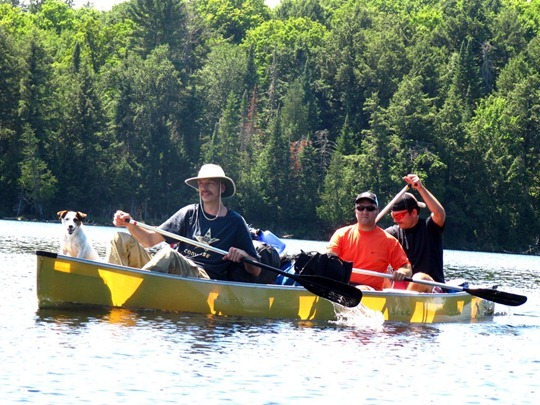
Photo of Algonquin Park by James D. Schwartz / The Urban Country
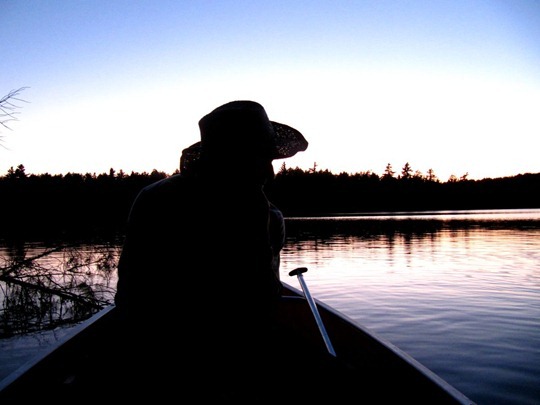
Photo of Algonquin Park by James D. Schwartz / The Urban Country
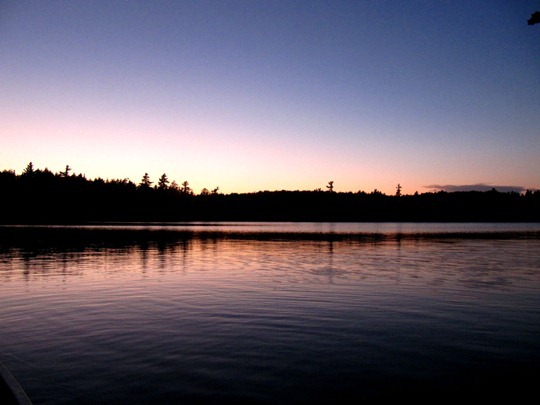
Photo of Algonquin Park by James D. Schwartz / The Urban Country

Photo of Algonquin Park by James D. Schwartz / The Urban Country
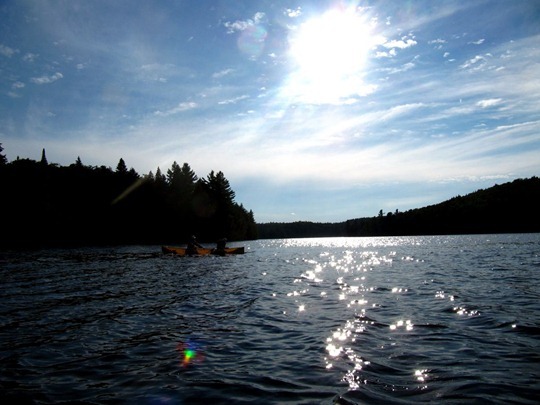
Photo of Algonquin Park by James D. Schwartz / The Urban Country
Before leaving on the trip, I promised my wife I would write a poem for our daughter Sofia. I originally intended for it to be longer, but I didn’t want it to be forced (since I never write poems), so I kept it brief and to the point (sorry it’s not a happier poem):
But for a brief time
Inside the wilderness,
I stare into the sky.
Free from the comforts of modern life,
Consumerism elusive,
But for a brief time.Then I think about you.
Forty-two days ago,
You entered this world.
Wisdom in your name,
Innocent and pure.Free from corruption and greed,
Needing nothing but love and care.
Free from consumerism,
But for a brief time.
It would be unbecoming of me to end this article without including a Henry David Thoreau quote. So I leave you with these two quotes circa 1854 from his famous essay Walden:
“However mean your life is, meet it and live it: do not shun it and call it hard names. Cultivate poverty like a garden herb, like sage. Do not trouble yourself much to get new things, whether clothes or friends. Things do not change, we change. Sell your clothes and keep your thoughts. God will see that you do want society.”
“I went to the woods because I wished to live deliberately, to front only the essential facts of life, and see if I could not learn what it had to teach, and not, when I came to die, discover that I had not lived.”
James D. Schwartz is a Transportation Pragmatist and the Editor of The Urban Country. You can contact James at james.schwartz@theurbancountry.com or follow him on Twitter.
Related Articles:
- Experiencing Algonquin Park (Aug 2010)
- Middle-Aged Men Powering Through Midlife Crisis (Aug 2009)
- California Dreaming (Aug 2008)
- No Cars. No Traffic Signals. No Deaths. (June 2011)
Didn’t put 2+2 together. Thought you might be getting lazy 🙂
I could use a lil’ algonq right now.
Algonquin could use a little Mark too 🙂 We missed you man.
Didn’t put 2+2 together. Thought you might be getting lazy 🙂
I could use a lil’ algonq right now.
Algonquin could use a little Mark too 🙂 We missed you man.
“. . .you could call them cousins or “brothers from a different mother”. ”
And Hobie appears to have been inbreeding them.
Wasn’t sure what you meant, so I looked it up. Neat idea! http://www.hobiecat.com/kayaking/
“. . .you could call them cousins or “brothers from a different mother”. “
And Hobie appears to have been inbreeding them.
In full agreement with you, as I wrote just a day ago on my own blog:
“Dear Canadians, much of Canada is very beautiful, but if you give it a passing thought, the more beautiful places are that way when they have fewer of you on it! The places that were beautiful have been ‘loved to death’ by those of you who think that there’s nothing a monster-second-home, jet-skis, and ashphalt for an SUV that will never touch gravel, can’t improve: Muskoka, Niagara Falls, Canmore, Whistler… It’s a real shame, because it is only your natural destinations that can bring in the tourists. Do you imagine that your cities do? You have a couple of bits of pretty cities, all of them doughnutted by big-box stores and drive-through vomitoria.”
http://hanlonsrzr.blogspot.com/2011/08/back-in-tokyo-from-toronto.html
It is really a shame that tourists can’t enjoy our natural destinations without ruining them. Algonquin Park is one of the few places that people generally leave the park as it was before they came. It’s quite refreshing. When we hike through Rouge Park in Scarborough, we usually end up with a garbage bag full of waste from people littering on the hiking trails. Quite sad.
In full agreement with you, as I wrote just a day ago on my own blog:
“Dear Canadians, much of Canada is very beautiful, but if you give it a passing thought, the more beautiful places are that way when they have fewer of you on it! The places that were beautiful have been ‘loved to death’ by those of you who think that there’s nothing a monster-second-home, jet-skis, and ashphalt for an SUV that will never touch gravel, can’t improve: Muskoka, Niagara Falls, Canmore, Whistler… It’s a real shame, because it is only your natural destinations that can bring in the tourists. Do you imagine that your cities do? You have a couple of bits of pretty cities, all of them doughnutted by big-box stores and drive-through vomitoria.”
http://hanlonsrzr.blogspot.com/2011/08/back-in-tokyo-from-toronto.html
It is really a shame that tourists can’t enjoy our natural destinations without ruining them. Algonquin Park is one of the few places that people generally leave the park as it was before they came. It’s quite refreshing. When we hike through Rouge Park in Scarborough, we usually end up with a garbage bag full of waste from people littering on the hiking trails. Quite sad.
Wasn’t sure what you meant, so I looked it up. Neat idea! http://www.hobiecat.com/kayaking/
I also spent a good number of days in Algonquin, hiking, biking, and canoeing, throughout the years. I think that all natural destinatinations shouldn’t be readily available by power machines (cars, boats, trains, etc.). Sure, bring people close, but then the last 4 or 6 km let people walk or bike or canoe. This will weed out the obnoxious types that contribute mostly by creating noise and other pollution. It is incredible that so many people “escape the city” to go to their cottages only to bring all that insanity with them: TV, loud music, power boats, ATVs, dirt bikes, etc. What’s the point? They’ve created other cities by the lakes and continue with their obnoxiousness. They are also willing to be stuck in traffic jams to get to their cottage cities and back. BTW, very nice photos, James.
I also spent a good number of days in Algonquin, hiking, biking, and canoeing, throughout the years. I think that all natural destinatinations shouldn’t be readily available by power machines (cars, boats, trains, etc.). Sure, bring people close, but then the last 4 or 6 km let people walk or bike or canoe. This will weed out the obnoxious types that contribute mostly by creating noise and other pollution. It is incredible that so many people “escape the city” to go to their cottages only to bring all that insanity with them: TV, loud music, power boats, ATVs, dirt bikes, etc. What’s the point? They’ve created other cities by the lakes and continue with their obnoxiousness. They are also willing to be stuck in traffic jams to get to their cottage cities and back. BTW, very nice photos, James.
Human power is timed rate of work done by a human. Most humans can exert only less than one-half horsepower for a duration of a few minutes. World records of power performance by humans are of interest to work planners and work-process engineers.
Human power is timed rate of work done by a human. Most humans can exert only less than one-half horsepower for a duration of a few minutes. World records of power performance by humans are of interest to work planners and work-process engineers.
World information of power efficiency by people are of interest to perform organizers and work-process designers.
These are called intermittent lakes, ephemeral lakes, or seasonal lakes and can be found in karstic terrain. A prime example of an intermittent lake is Lake Cerknica in Slovenia or Lag Prau Pulte in Graubünden. Other intermittent lakes are only the result of above-average precipitation in a closed, or endorheic basin, usually filling dry lake beds. This can occur in some of the driest places on earth, like Death Valley.
These are called intermittent lakes, ephemeral lakes, or seasonal lakes and can be found in karstic terrain. A prime example of an intermittent lake is Lake Cerknica in Slovenia or Lag Prau Pulte in Graubünden. Other intermittent lakes are only the result of above-average precipitation in a closed, or endorheic basin, usually filling dry lake beds. This can occur in some of the driest places on earth, like Death Valley.
Pingback: Human Power Around The World ← The Urban Country