


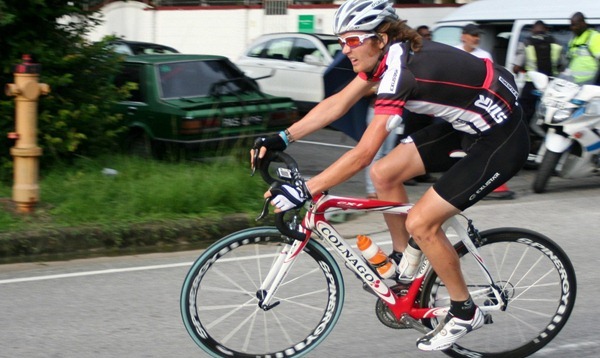
Racing bicyclist – photo by Team Traveller
Kent over at Kent’s Bike Blog recently wrote a brilliant piece that illustrates how shopping for bicycles is less about practicality/pragmatism and more about sport & performance. To emphasize this point, Kent uses a parable where he fictitiously goes shopping for an automobile.
Here is an excerpt:
So I cycled over to one of my local “car” dealerships to see about purchasing an automobile and what I found was quite enlightening. When I first entered the shop a young fellow there was vigorously engaged in conversation with a customer about the merits of one particular transmission brand over another, something about how the latest electronic syncromesh whosits made last year’s syncromesh hopelessly obsolete and how he couldn’t believe anyone would still considering driving such junk.
This discussion went on for quite a few minutes so I kept myself busy by examining the various automobiles displayed in the shop. They were shiny and looked expensive and frankly I had no idea exactly made one better than the other or why I might want to select the red one over the blue one. Eventually the car fellow noticed me and asked if I had any questions. “Oh yes,” I assured him I had plenty of questions. “I’m looking to buy a car,” I began.
“NASCAR or Formula One?” the fellow queried.
“Excuse me?”
“What kind of racing are you going to do?” the man asked.
“Uhm, I wasn’t thinking of racing, more like maybe driving to the store. I understand people do that?”
The man sighed. “Well,” he explained, sadly, “you could do that. I mean, some people do, but once you get a car, you’ll want to race. You’re really better off getting something race-worthy to start with.”
Kent’s parable then touches on “driving clothes”:
“Um, the seat isn’t very comfortable,” I noted.
“Well,” the man explained, “you’re not wearing driving pants. Of course, you’ll want driving pants.”
“Really?” I asked. “I was thinking I’d probably just drive around in my normal clothes.”
“Oh no,” the man laughed, “you’ll want driving clothes. We have a nice selection in a variety of bright colors with a variety of logos on them.”
Kent also discusses specialized components:
Looking at the floor of the car I was surprised to see there was no gas pedal. “Isn’t there supposed to be something I push with my foot to make it go?”
“Oh,” the man explained, “the nicer cars don’t come with gas pedals. That way you can select your own. We can install a test ride gas pedal for you…” He then went on to explain the virtues of the various gas pedal systems, how they would hold my foot in the optimal driving position and that all serious drivers had such gas pedals. I could get a simple pedal if I wanted to but…
I opted for the gas pedal that the car man assured me that he himself used.
Read the rest of Kent’s post here.
The topic of bicycles being perceived as recreational and racing toys comes up often on this blog.
When I was in the market for a bicycle back in 2006 I had decided to go with a racing bicycle; primarily because I only had space for one bike and I needed a bike to do a long trip.
I have since discovered the comfort and convenience of sturdy, upright urban bicycles that can be left outside year-round, and I also came to the realization that heavy bicycles are comfortable for long trips too.
The pressure to go with a racing bicycle is partly due to the fact that a significant number of bike shops in North America cater to the high-end racing culture. The economics make sense – there are plenty of wealthy men and women (mostly men) who will readily spend several thousand dollars on racing bicycles and the gear that comes with the racing culture.
There is nothing wrong with this of course, but it is nice to have choices and not be pressured to buy a racing bicycle and all sorts of unnecessary gear when all you need is a reliable city bike to run your errands in your regular clothes.
The problem is that because there have historically been so few stores selling sturdy commuter bikes, they aren’t well recognized, and thus there hasn’t been much demand for them.
Thankfully recent trends seem to indicate a growing appetite for everyday commuter bicycles, so everyday urban bicycle shops should be popping up everywhere in the coming years.
Here in Toronto I frequent Curbside Cycle which specifically caters to the everyday urban commuter. Even some of the racing bike shops here in Toronto seem to be adding commuter bikes with shopping baskets to their inventory.
Calgary, Alberta is known more for its cowboys than bicycle commuters, but that Western Canadian city boasts having a store that caters to everyday bicycle commuters. BikeBike Calgary is owned by our friend/reader Sean and he carries brands that most Calgarians have probably never heard of. But they will, in time.
Instead of pushing sport bicycles and gear on all consumers regardless of their needs, bike shops need to evolve to catering to bicycle transportation. They should provide options for everyday bicyclists to ride in their regular clothes. Such as the one in this photo:
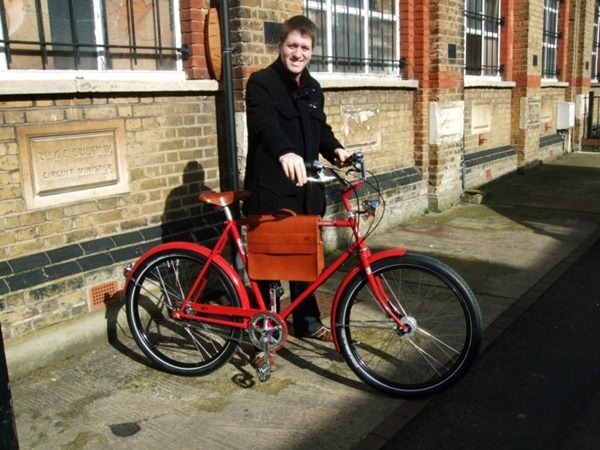
Everyday Bicyclist Photo via ratemyvelo.com
Thank you Kent for so succinctly highlighting the bicycle racing culture and the impact it has on people looking for regular bicycles for commuting.
If you haven’t already done so, visit Kent’s Bike Blog.
James D. Schwartz is a Transportation Pragmatist and the Editor of The Urban Country. You can contact James at james.schwartz@theurbancountry.com or follow him on Twitter.

Related Articles:
- Avid Urban Cyclist Clothing (Nov 2011)
- Lawyer On a Bike: Interview with Ian Flett (July 2012)
- Dutch Cycle Chic – Toronto Style (Dec 2010)
- 10 Observations About Bicycling in Amsterdam (March 2012)
- Anatomy of a Dutch Bicycle (Jan 2011)
Lots of lulz. Added another bike blog to my bookmarks.
I recently purchased a 3-speed Dutchi from Linus, at Whoa! Nellie Bikes (10th and Main) in Mount Pleasant. Highly recommended for those Vancouverites who want to avoid the mountain and road bike mentality that dominates our city.
I have a Batavus Breukelen (Curbside Cycles) as my ‘daily driver’, and wouldn’t give it up for anything. It doesn’t rot away in the winter salt like my previous few bikes, the chain is always dry & clean, it keeps me dry when the pavement’s wet, the brakes always work consistently, it can carry a ton on the rack, and it is very comfortable. But I must say that, having picked up a 30 yr old Peugeot Spring road bike this summer, there IS something to be said for a bike whose weight, geometry, and gearing just pull you along the road. It’ll never be my daily driver, but it’s like having a little blue sports car to drive on weekends in place of the Volvo wagon one drives every day. And having just had to endure buying a car, the ‘salesman’s theatre’ and the ritual song & dance one has to endure simply to purchase a vehicle matches anything you’ll find in a bike shop, I’d think.
I’m going to play the devil’s advocate here and admit that I have 4 bikes which I use daily for transportation (one at a time) and none of which is a practical bike (though all except for the racingest bike have racks). I kind of like North American urban cycling culture right now. Sure I wish there were more bikes on the road and fewer cars and I wish that more people would consider bikes practical and not merely recreational, but I don’t think the two are mutually exclusive.
It’s good to point out the cultural bias that we have against bikes as transportation but I wouldn’t want to miss out on a key selling point either: bikes ARE fun. The main reason I got into bike transportation – and I’m sure this is true of most people who ride in North America now – is that it was the most fun and pleasant way to get around. Unlike the subway I could actually see where I was going, choose my own route, and get exercise at the same time. So to me that elevates cycling above mere transportation. When I ride my bike I’m double- or triple-tasking: exercise, meditation, fun, etc…
I guess my point is that many cycling advocates have almost a fetish about Dutch bike culture where people ride for utility only and they “wear regular clothes” on big heavy cruisers. And of course, as an alternative to North American car culture, that’s a very good thing. But focusing on bikes as mundane and practical eliminates the joy.
Straw man much? You seem to think there’s only two types of bikes someone can use in the city: racing bikes (which cost a lot of money and require Lycra at all times!) and comfy, heavy, upright commuter bikes (which, if they are like the one you illustrate, also cost a lot of money — I think Pashleys go for at least $2000, do they not?). Believe it or not, there are people all over this city riding old and new road bikes, mountain bikes, comfort hybrids, performance hybrids and cruisers that cost well under $1000 each — hell, well under $300 if you know how to shop Craigslist — at various speeds while in street clothes, and, where appropriate, in selected bits of Lycra where we judge that we need it for comfort.
If you are talking about serving customers who really want a specific type of beautiful European bike, like a Brompton or Pashley or Batavus, who can also afford a price I can never contemplate paying for even the most gorgeous bike in the world, all power to you. Enjoy your pretty, expensive bikes that are very well made and which will last for years.
The rest of us with smaller budgets and more flexible attitudes about what makes a suitable bike for us will patronize Craigslist, Bike Pirates and even some of those bike stores Kent caricatures as snobby and out of touch.[1] But please don’t shed crocodile tears on how we’re being ill-served by retail choices in this city. If people want to ride at a sedate pace and an upright position, there are plenty of affordable (and less durable) bikes available to fit our needs.
[1] I’m a middle-aged woman, reasonably fit but not about to be taken for an athlete any time soon, who has been in several Toronto bike shops over the past few years looking for various kinds of bikes (although what I have bought ended up being from Craigslist). Even allowing for the comedic exaggeration in the piece you quote, I have never had an interaction remotely close to what Kent describes (yes, comic exaggeration, I know, but comedy should be based on truth, not outdated, knee-jerk stereotypes), even when I was dealing with shop staff you were significantly younger and fitter than me. I certainly never got pressured to get a sporty bike or spandex. In
case you think they were condescending to someone of my age, the times I
expressed interest in fast bikes I was treated with respect, too.
Good work…unique site and interesting too… keep it up…looking forward for more updates.